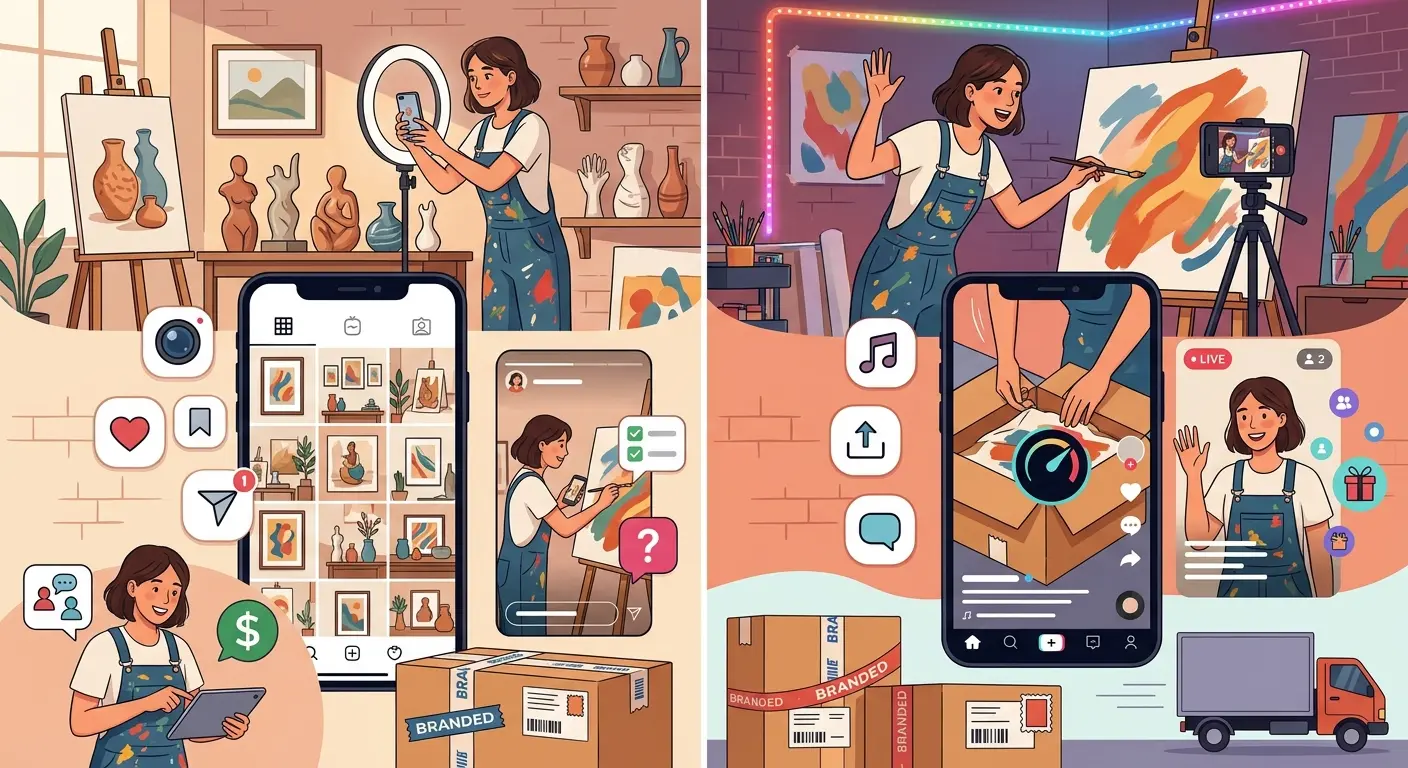
How to Sell Art on Social Media? An Instagram and TikTok Guide
Selling artwork used to mean connecting with a gallery, getting into an exhibition, or already having the right network. Today, with just a phone and the right strategy, Instagram and TikTok can become powerful sales channels on their own. But there's a real difference between "posting content" and "actually making sales." In this guide, we break down exactly what it takes to turn social media into a genuine revenue stream for your art.
1. Start With the Right Profile Setup
Switching to a business or creator account on Instagram unlocks profile insights, contact buttons, and shopping features — the first real step toward selling. Your bio needs to make three things instantly clear: who you are, what kind of art you make, and how someone can actually buy it. On TikTok, the same principle applies — your profile description and a link-in-bio tool (like Linktree or Beacons) are essential for directing followers to your point of sale.
2. Actively Use Instagram Shop and TikTok Shop
As of 2026, both Instagram and TikTok have significantly matured their social commerce infrastructure. Instagram Shopping lets you tag products and enables in-app checkout without leaving the platform, while TikTok Shop brings a similar experience directly into short-form video. Adding your artwork to these built-in shopping features means a potential buyer doesn't even have to ask "where can I buy this?" — they can complete a purchase in a single tap.
3. Process Content Outperforms Finished Pieces
Instead of only posting a finished painting, showing the process behind it — brushstrokes, color mixing, before-and-after moments — creates a connection to the effort behind the work, and that connection frequently drives the buying decision. On TikTok in particular, "watch me paint" style videos — essentially the art-world version of the "get ready with me" format — tend to be favored organically by the algorithm, since they keep viewers watching to the end.
4. Write Titles for Scrolling Behavior, Not Search Behavior
TikTok and Instagram users aren't searching the way they would on Google — they're scrolling through a feed. That means your captions and titles need to front-load the strongest selling point immediately: something like "Hand-Painted Original Canvas, Limited Edition" performs far better than a vague, generic description.
5. Show the Work in a Living Space, Not Just the Studio
In product photography, images showing a piece displayed in a real living space — hanging on a living room wall, sitting above a desk — build a far stronger emotional connection than plain studio shots. When a potential buyer can picture the piece in their own home, their likelihood of purchasing increases noticeably.
6. Don't Neglect Reels and Short-Form Video
Instagram's algorithm still prioritizes Reels for organic reach. Periodically sharing short, vertical videos — close-up detail shots, the completion moment, or even the packaging process — helps attract new followers while keeping existing ones engaged and reminded of your work.
7. Consider Creator Partnerships and Affiliate-Style Marketing
Partnering with smaller creators — particularly those focused on interior design, home decor, or art collecting — is an effective way to introduce your work to audiences you'd never reach organically. TikTok's creator affiliate programs are especially low-risk, since you only pay commission on actual completed sales.
8. Be Transparent About Pricing
The classic "DM for price" approach discourages a significant portion of potential buyers. Listing the price clearly — in the caption, the product tag, or the link in your bio — reduces friction in the buying process and directly improves conversion rates.
9. Consistency Beats Going Viral
A single viral video might create a one-time spike in sales, but a sustainable art-selling business is built on consistent posting habits. Setting up a weekly content rhythm — new work, process content, customer testimonials, behind-the-scenes stories — both gets rewarded by the algorithm and builds genuine trust with your audience over time.
Final Thoughts
Instagram and TikTok are no longer just visibility tools — used correctly, they can become genuine sales channels. Success doesn't come from waiting to go viral; it comes from proper profile setup, actively using built-in shopping features, authentic process content, and consistent posting habits. Rather than squeezing your art into a single platform's format, building a strategy that plays to each platform's specific strengths tends to deliver the most sustainable results over time.




Who is an art collector, and what do they look for before buying a piece? We...

As AI tools reshape how art is made and shared, artists face a pivotal question: is...

Instagram has become much more than a platform for sharing photographs and building an audience. For...