Instagram has become much more than a platform for sharing photographs and building an audience. For artists, it can also function as a powerful tool for art promotion, collector discovery, direct sales, and building a personal brand.
As collectors increasingly discover artists and artworks through social media, Instagram is becoming an important part of the modern art market. According to the Art Basel & UBS Survey of Global Collecting 2025, 35% of high-net-worth collectors purchased art through Instagram links, while 20% of their total art spending was allocated to direct artist sales, including studio sales, Instagram-based purchases, and commissions.
So, can artists really make money by selling art on Instagram?
Yes — but Instagram works best as more than a simple sales channel. It can be a discovery platform, portfolio, communication tool, and gateway to direct relationships with collectors.
The traditional art market has historically relied heavily on galleries, art fairs, dealers, and auctions.
Today, artists have another option: building their own audience and communicating directly with potential buyers.
Instagram is particularly suitable for visual artists because the platform is built around visual content. A single artwork can reach potential collectors without the artist necessarily having access to a physical gallery.
More importantly, Instagram can help artists build familiarity and trust before a purchase takes place.
An artist can use Instagram to showcase:
This means that the relationship between an artist and a potential collector can begin long before the actual sale.
Yes.
The growth of Instagram as an art discovery and purchasing channel is one of the most significant developments in the contemporary art market.
According to the Art Basel & UBS Survey of Global Collecting 2025, 35% of surveyed high-net-worth individuals purchased artworks through Instagram links. The same research found that 20% of total spending was allocated to direct artist sales in 2024/2025, including studio sales, commissions, and Instagram-based purchases.
The 2026 Art Market Report also highlights the growing role of direct artist-to-collector relationships. Artist-direct sales, including studio sales, Instagram purchases, and direct commissions, doubled from 10% of collector spending in 2021 to 20% in 2025.
This does not mean galleries and dealers are becoming irrelevant. Instead, it shows that collectors now have more ways to discover and purchase art.
There is no single way to sell artwork through Instagram.
Artists can use several different approaches depending on their audience, type of artwork, and business model.
One of the simplest methods is selling through Instagram Direct Messages.
An artist can publish an artwork, provide basic information about it, and invite interested collectors to send a message.
The conversation can then cover:
This approach can work particularly well for emerging artists who are building their first collector base.
Instead of completing every transaction manually through Instagram messages, artists can direct potential buyers to an online art platform.
This creates a more structured purchasing experience where collectors can discover:
Instagram becomes the discovery and marketing channel, while the online platform becomes the place where collectors can explore and purchase artworks.
For artists who want to look more professional and make their works easier to discover, this approach can be considerably more scalable than managing every sale through direct messages.
Instagram can also be effective for launching limited editions.
For example, an artist can announce that only a certain number of prints will be available.
This creates a clear reason for collectors to act quickly.
A limited release can include:
The key is to communicate scarcity honestly rather than creating artificial urgency.
Instagram can also generate income through commissioned works.
A potential client may discover an artist through a post and contact them about creating a personalized artwork.
Commission opportunities can include:
For many artists, commissions can become an additional revenue stream alongside selling existing works.
Posting only photographs of finished artworks may not be enough.
Collectors often want to understand the artist behind the work.
A strong Instagram strategy can combine different types of content.
High-quality photographs or videos of completed artworks should remain at the center of an artist's profile.
Every post should ideally communicate essential information such as:
Showing the creative process can make an artist's profile more personal.
Studio photographs, sketches, material preparation, painting stages, and short videos can help potential collectors understand how an artwork is created.
Collectors are not only buying objects. They are often buying into an artist's story, perspective, and creative journey.
Sharing the ideas and experiences behind the work can make the artwork more meaningful to potential buyers.
Short-form video can provide an effective way to show artworks from different angles and demonstrate their texture, scale, and details.
For example, instead of posting only a photograph of a painting, an artist could create a short video showing:
Studio → creation process → finished artwork → close-up details
This can give potential collectors a better understanding of the physical characteristics of the piece.
This is one of the most debated questions in online art sales.
There is no universal rule.
Some artists prefer to display prices publicly because it makes the purchasing process more transparent and allows potential buyers to immediately understand the price range.
Others prefer to direct interested collectors to private conversations.
The right approach depends on the artist's market position, sales strategy, and type of collector.
However, removing unnecessary friction can make the buying process easier.
If the artwork is available for purchase, potential buyers should be able to understand what is being sold, how much it costs, and how they can purchase it without unnecessary steps.
One of the biggest misconceptions about selling art on Instagram is that an artist needs hundreds of thousands of followers.
This is not necessarily true.
In the art market, the quality of an audience can be more important than its size.
An artist with 5,000 followers who includes collectors, interior designers, curators, art professionals, and serious art enthusiasts may have a more valuable audience than an artist with 100,000 followers who has very little connection to potential buyers.
The goal should therefore not simply be:
“How can I get more followers?”
A better question is:
“How can I build an audience that is genuinely interested in my work?”
Getting attention is only the first step.
Artists need to create a path from discovery to purchase.
A simple conversion journey could look like this:
Instagram Post → Artist Profile → Artwork Collection → Artwork Details → Purchase/Contact → Collector
Every step should be clear.
An artist's Instagram bio should explain who they are and what they create. The profile should then make it easy to discover available works.
For example:
Artist profile → Available artworks → Artwork details → Purchase
The fewer unnecessary steps a collector has to take, the easier it becomes to convert interest into a real transaction.
Buying an original artwork online is different from buying a conventional consumer product.
Collectors may want to know:
For this reason, an artist's online presence should communicate professionalism and transparency.
A detailed artist profile, high-quality artwork images, clear descriptions, provenance information where applicable, and secure purchasing processes can all contribute to buyer confidence.
Instagram is powerful, but it also has limitations.
Social media platforms are primarily designed for discovery and engagement. An artist's content can disappear quickly in a constantly changing feed.
An online art platform, on the other hand, can provide a more structured environment for presenting and discovering artworks.
| Feature | Online Art Platform | |
|---|---|---|
| Audience discovery | Excellent | Excellent |
| Visual storytelling | Excellent | Strong |
| Artist profile | Basic to moderate | Detailed |
| Artwork catalog | Limited | Structured |
| Collector discovery | Strong | Strong |
| Direct communication | Excellent | Strong |
| Searchability of artworks | Limited | Strong |
| Long-term portfolio | Limited | Strong |
| Purchase experience | Depends on setup | Usually more structured |
For many artists, the strongest strategy is not choosing one over the other.
It is using both together.
Instagram can attract attention, while a dedicated art platform can organize the artist's portfolio and make the purchasing journey easier.
Instagram can absolutely contribute to an artist's income, but it should not necessarily be treated as the artist's entire business model.
A sustainable art business can combine multiple revenue streams:
Instagram can support many of these activities by continuously connecting the artist with an audience.
The platform therefore works best as part of a broader artist business strategy rather than as a standalone marketplace.
The art market is becoming increasingly connected.
Collectors can discover an artist on Instagram, research their work online, visit an exhibition, communicate directly with the artist, and complete the purchase through a digital platform.
This creates a more flexible relationship between artists and collectors.
The 2026 Art Market Report notes that direct artist sales have been gaining importance, while also emphasizing that galleries continue to play an important role in building artist careers, establishing market credibility, and supporting artists.
The future is therefore unlikely to be simply “Instagram instead of galleries.”
Instead, artists will increasingly have multiple channels through which they can build visibility, develop collector relationships, and generate revenue.
Selling art on Instagram is no longer just an experimental idea. It has become a meaningful part of the modern art market.
For artists, Instagram can provide access to new audiences, potential collectors, commissions, collaborations, and direct sales.
But successful art sales require more than posting beautiful images.
Artists need to combine strong visual presentation, storytelling, consistent communication, professional artwork information, trust, and a clear purchasing journey.
Instagram can bring the collector to the artist.
The next step is giving that collector a reason to stay, explore the artist's work, and ultimately make a purchase.
For artists looking to build a long-term career, the real opportunity is not simply selling an artwork on Instagram. It is building a recognizable artistic identity and creating lasting relationships with collectors.


Who is an art collector, and what do they look for before buying a piece? We...
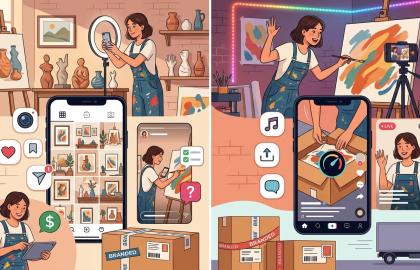
Learn how to sell your artwork through Instagram and TikTok without needing a gallery. From profile...

As AI tools reshape how art is made and shared, artists face a pivotal question: is...