Completing a painting can take months. Finding the right colors, building the composition, and creating an original work requires great effort. Yet for many artists, the real challenge is not producing the work, but getting it to the right buyer.
Today, thanks to the internet, artworks can reach art lovers not only in your own city but all around the world. In the past, working with a gallery was almost mandatory to sell art; now, with a professional website, a strong digital portfolio, and the right marketing strategies, it is possible to succeed independently as well.
Still, success in the art market is not limited to producing beautiful works. Pricing correctly, building trust, increasing visibility, and showcasing your works on the right platforms are just as important as your artistic talent.
In this comprehensive guide, we will walk step by step through how to sell your paintings professionally, which channels you should use, and the strategies you can apply to build a long-term art career.
Digital transformation has fundamentally changed the art world as well.
Collectors no longer discover new artists only by visiting physical galleries. They search on Google, follow artists on social media, and browse online art platforms.
This shift creates a great opportunity for independent artists.
While in the past artworks could only be sold through a handful of galleries, today you can:
With the right strategy, the digital world can go far beyond the opportunities offered by physical galleries.
Many artists try to sell right away. However, preparing before you sell significantly increases your chances of success.
People will see your work for the first time on a screen.
Therefore:
Professional photographs increase the perceived value of the artwork and positively influence the purchasing decision.
Art is not only a visual experience; it also tells a story.
Collectors want answers to questions such as:
Sharing the thinking behind your work helps you build an emotional connection with the buyer.
A Certificate of Authenticity builds trust, especially for high-value works.
The certificate may include the following information:
This document is an important element of trust for collectors.
There are many different channels through which you can sell your artwork. The most successful artists usually don't rely on a single platform; they use different channels together to reach a wider audience.
In the long run, the most valuable investment is building your own website.
With your own site:
A professional website is the center of your digital art career.
Online art galleries are one of the effective ways to bring your works to wider audiences.
For example, Thearte.io is a modern art platform that brings artists and art lovers together in the digital space. Artists can showcase their works professionally, make their collections more visible, and reach art lovers from different cities and even different countries.
One of the most important advantages of online galleries is that the artist can access not only the local market but a global audience. This significantly increases the potential for works to be discovered and sold.
Even as digital platforms continue to grow, physical galleries still hold an important place in the art world.
Gallery partnerships:
In return, galleries typically take a commission on sales.
Instagram, Pinterest, and YouTube are not just sharing platforms; they are also powerful marketing tools.
On social media, you can regularly share content such as:
This content both builds trust and grows your follower base.
One of the topics artists struggle with most is setting prices.
Pricing too low can diminish the perceived value of the work, while pricing too high can slow down sales.
When setting a price, you can consider the following criteria:
For emerging artists, establishing a pricing policy that allows for regular sales leads to healthier growth in the long run.
Buying a work of art is often as much a financial decision as it is an emotional one.
That's why potential buyers look for answers to questions such as:
Answering all of these questions clearly on your website can increase your conversion rate.
If you want to sell artwork online, relying on social media alone is not enough. Today, many collectors and art lovers first search on Google for the works they want to buy.
For example, the following searches are quite common:
If your website doesn't appear in these searches, you may be missing out on a large portion of potential customers.
SEO (Search Engine Optimization) is the set of practices that helps your website rank higher on Google.
For an artist, the advantages of SEO include:
Artists who consistently produce blog content, in particular, can generate organic traffic for years.
Absolutely yes.
Many artists only share their works. However, Google rewards not only gallery pages but also informative content.
For example, you can write articles on topics such as:
This content not only attracts visitors but also positions you as an expert artist in your field.
Social media accounts can change, algorithms can be updated, or reach can drop. But your own website is entirely under your control.
A professional art website should include the following sections:
People don't just buy artworks; they also buy the artist's story.
That's why your biography should be:
Presenting your works by category improves the user experience.
For example:
This is one of the most powerful sections in terms of Google.
Artists who publish quality content every week gain a huge advantage in the long run.
A dedicated page should be created for each work.
Information that should be included on the page:
This information helps Google better understand your page.
In addition to your own website, being featured in trusted online art galleries can also increase your visibility.
For example, Thearte.io is a modern online art gallery where artists can professionally showcase their works in the digital space and connect with art lovers.
Some of the advantages Thearte.io offers include:
Being present on professional platforms like Thearte.io alongside your own website can strengthen your digital visibility.
Many artists focus on their follower count.
Yet what really matters is:
Gaining buyers, not followers.
There are accounts with 100,000 followers that never make a sale,
and there are artists with 5,000 followers who sell works regularly.
The reason is content strategy.
Instead of constantly sharing only finished paintings, you can use the following types of content:
This content builds trust.
When people buy art, they often invest not just in the visual but also in the story.
For example:
"This piece came to life after a morning I spent watching the sunrise on the Black Sea coast."
Narratives like this can increase the perceived value of the work.
Thanks to the internet, you can now sell works not only in Turkey but all over the world.
To do this:
Visitors coming from English-language Google searches can turn into a significant source of sales over time.
Not every artist has to sell only original works.
Many successful artists earn a significant portion of their income from print sales.
For example, sales can be structured as:
With this model, a single artwork can continue generating income for years.
A painting doesn't have to be displayed only on a wall.
Artworks can be used on:
Licensing agreements like these can provide long-term passive income.
Many artists skip this step.
Yet one of the most valuable digital assets is an email list.
When you launch a new collection,
announce a new exhibition,
or complete a new artwork,
you can reach thousands of people with a single click.
This method is independent of social media algorithms.
Artists who sell regularly share these common traits:
An art career is not a short-term sprint; it is a long-term journey.



Who is an art collector, and what do they look for before buying a piece? We...
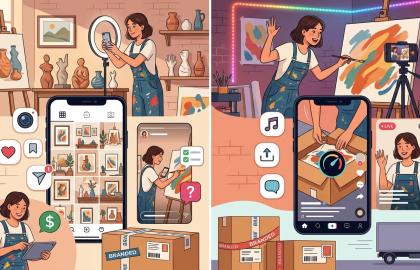
Learn how to sell your artwork through Instagram and TikTok without needing a gallery. From profile...

As AI tools reshape how art is made and shared, artists face a pivotal question: is...