Artists such as Gerhard Richter , David Hockney , Kerry James Marshall , Peter Doig , and Jenny Saville have expanded the language of painting by confronting both personal and collective experience. Their work demonstrates that painting remains a relevant and evolving medium capable of responding to political, social, and technological change.
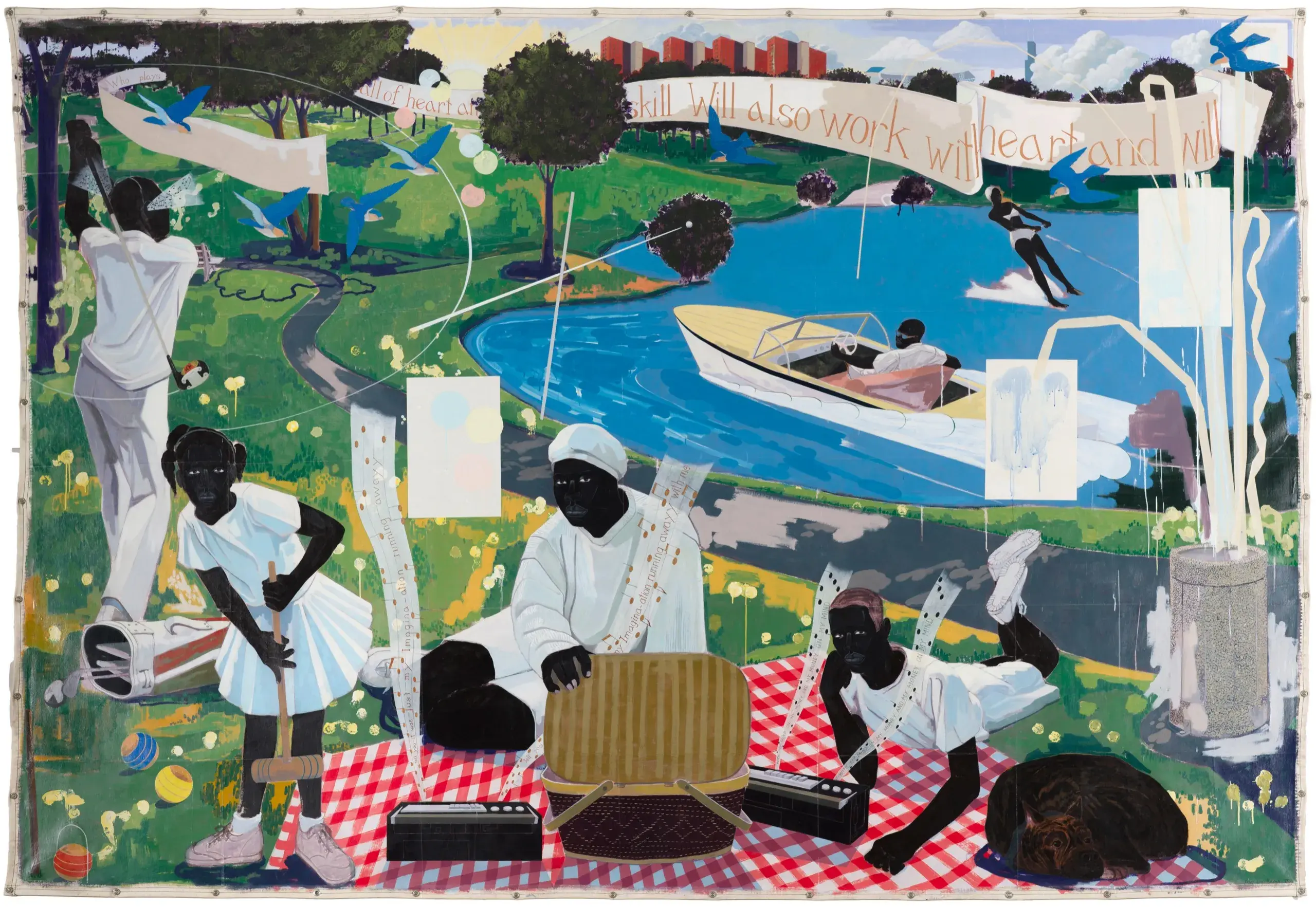
Marshall’s “Past Times,” from 1997. “Everything I do is based on my understanding of art history,” he says. “There isn’t a mode of art-making that I haven’t explored.” Art work © Kerry James Marshall / Courtesy the artist and Jack Shainman Gallery, New York
Painting After 2010: Memory, Identity, and the Persistence of the Image
Over the past fifteen years, painting has occupied a paradoxical position within contemporary art. While digital images have become omnipresent and endlessly reproducible, painting has increasingly been understood as a site of resistance — a medium that insists on duration, material presence, and embodied experience. Rather than competing with new technologies, painters have absorbed the conditions of the digital age and transformed them into critical reflection. In doing so, painting has regained intellectual and cultural urgency.
One of the defining characteristics of painting since 2010 is its renewed engagement with history and memory. Artists such as Gerhard Richter and Luc Tuymans have questioned how images shape collective remembrance. Their restrained palettes and deliberate ambiguity challenge the idea of visual certainty, reminding viewers that history is fragmented, unstable, and often mediated through images that obscure as much as they reveal. Painting becomes a space where doubt and reflection coexist.
At the same time, figuration has returned as a dominant force in contemporary painting. This return, however, is not nostalgic. It is deeply political. Kerry James Marshall has fundamentally altered the canon by centering Black bodies within large-scale, historically loaded compositions. His work confronts the exclusions of art history and reclaims visibility as a form of cultural power. Similarly, Jordan Casteel focuses on everyday presence and intimacy, using portraiture to challenge whose lives are deemed worthy of representation.
The body itself has become a central site of inquiry. Jenny Saville and Cecily Brown approach the figure as something unstable and fluid. Flesh is distorted, layered, and reworked, reflecting contemporary anxieties around gender, identity, and physicality. Their paintings reject idealized beauty in favor of vulnerability and intensity, reinforcing painting’s capacity to convey psychological depth.
Another significant development is the merging of abstraction and social meaning. Artists such as Mark Bradford use abstract surfaces to map urban environments, power structures, and economic inequality. In this context, abstraction is no longer detached from reality; it becomes a coded language through which political and social forces are visualized. Painting functions simultaneously as image and document.
Technological change has also reshaped painterly practice. David Hockney ’s embrace of digital tools such as the iPad demonstrates how painting has expanded beyond traditional materials without losing its conceptual core. His work suggests that the essence of painting lies not in medium alone but in the act of seeing, composing, and reimagining visual experience.
Despite stylistic diversity, what unites contemporary painters is a shared insistence on meaning in an age of excess imagery. Painting offers friction against the speed of consumption. It slows the viewer down, demanding time, attention, and interpretation. In a world saturated with images designed to be instantly consumed and forgotten, painting asserts its relevance through depth rather than immediacy.
Ultimately, the last fifteen years reveal that painting has not survived by resisting change, but by absorbing it. Contemporary painters engage with politics, identity, memory, and technology while maintaining a commitment to material presence and visual thought. Painting endures because it continues to ask fundamental questions: how do images shape our understanding of the world, and how can they still carry meaning in an age overwhelmed by visibility?
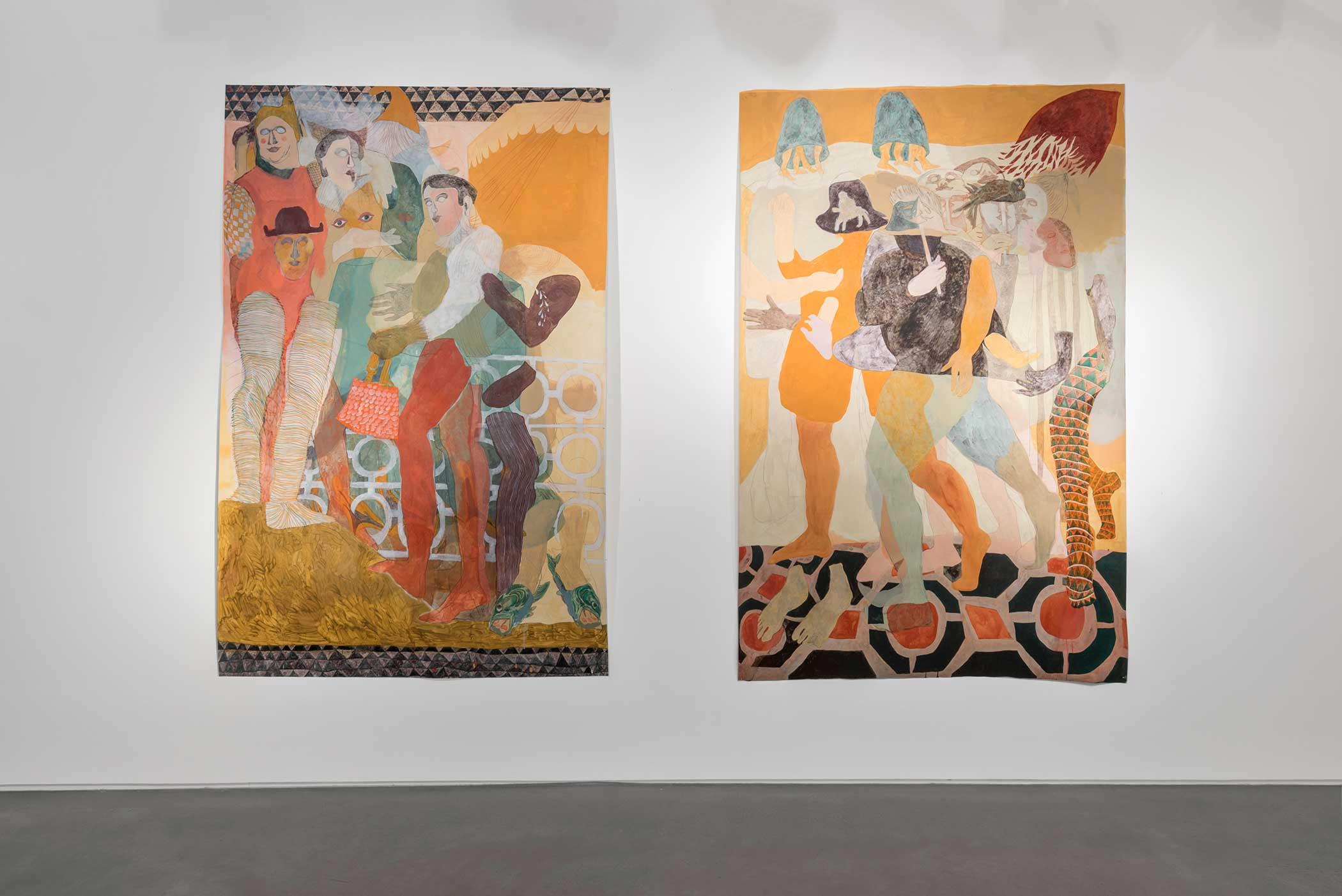
Ella Walker. Study for Music (2018)