In contemporary painting, few artists have challenged traditional ideas of the body as powerfully as Jenny Saville .
Over the last fifteen years, her work has played a key role in the renewed importance of figurative painting, pushing the human body beyond beauty, idealization, and comfort.
Saville’s monumental paintings confront the viewer with flesh that is dense, distorted, layered, and unapologetically present. Rather than presenting the body as an object of desire, her work explores physicality, vulnerability, gender, and identity through aggressive brushwork and raw scale. In doing so, she reclaims painting as a space for confrontation rather than decoration.
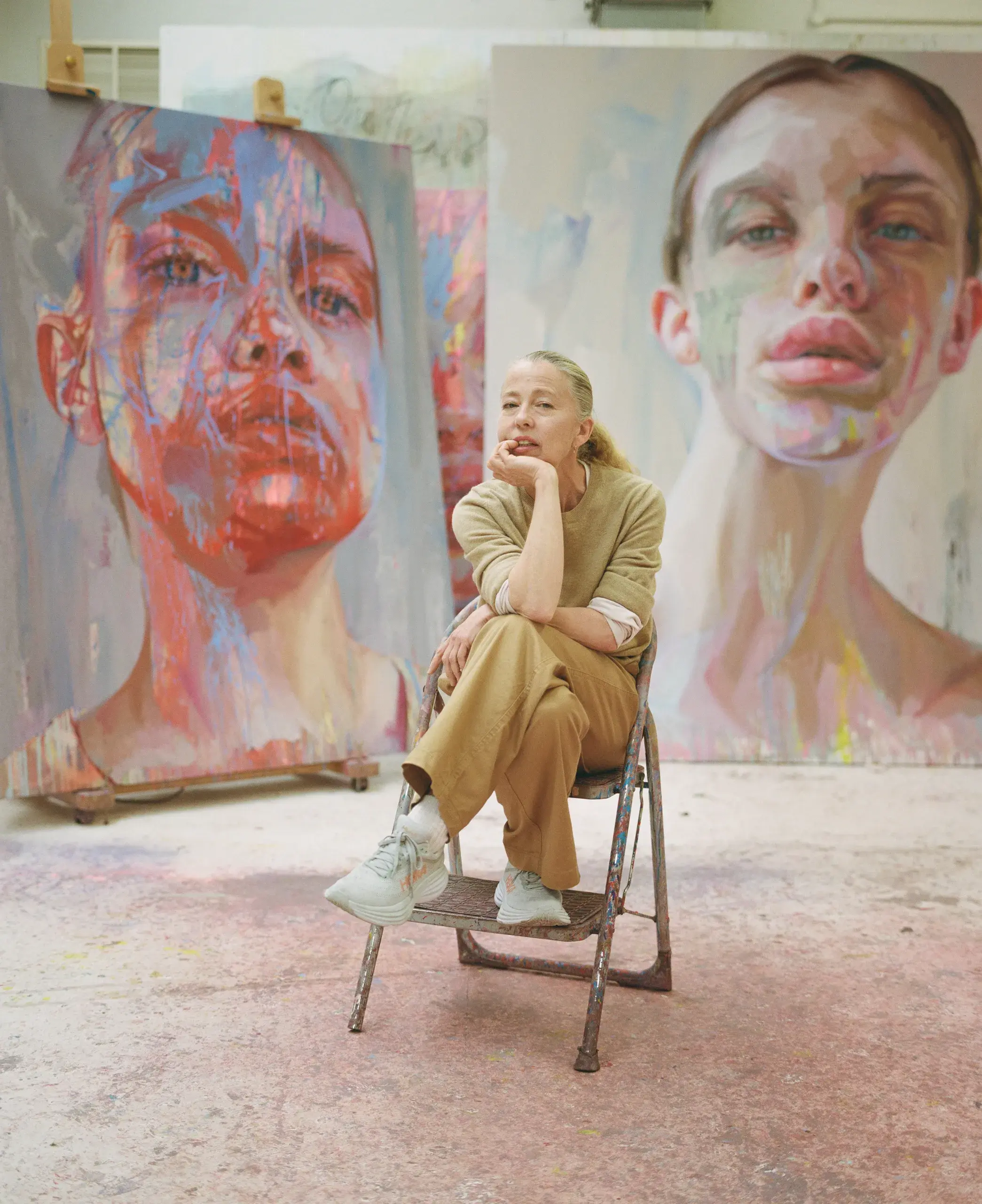
Jenny Saville proves that painting remains one of the most powerful ways to confront identity, vulnerability, and the human body in contemporary art.
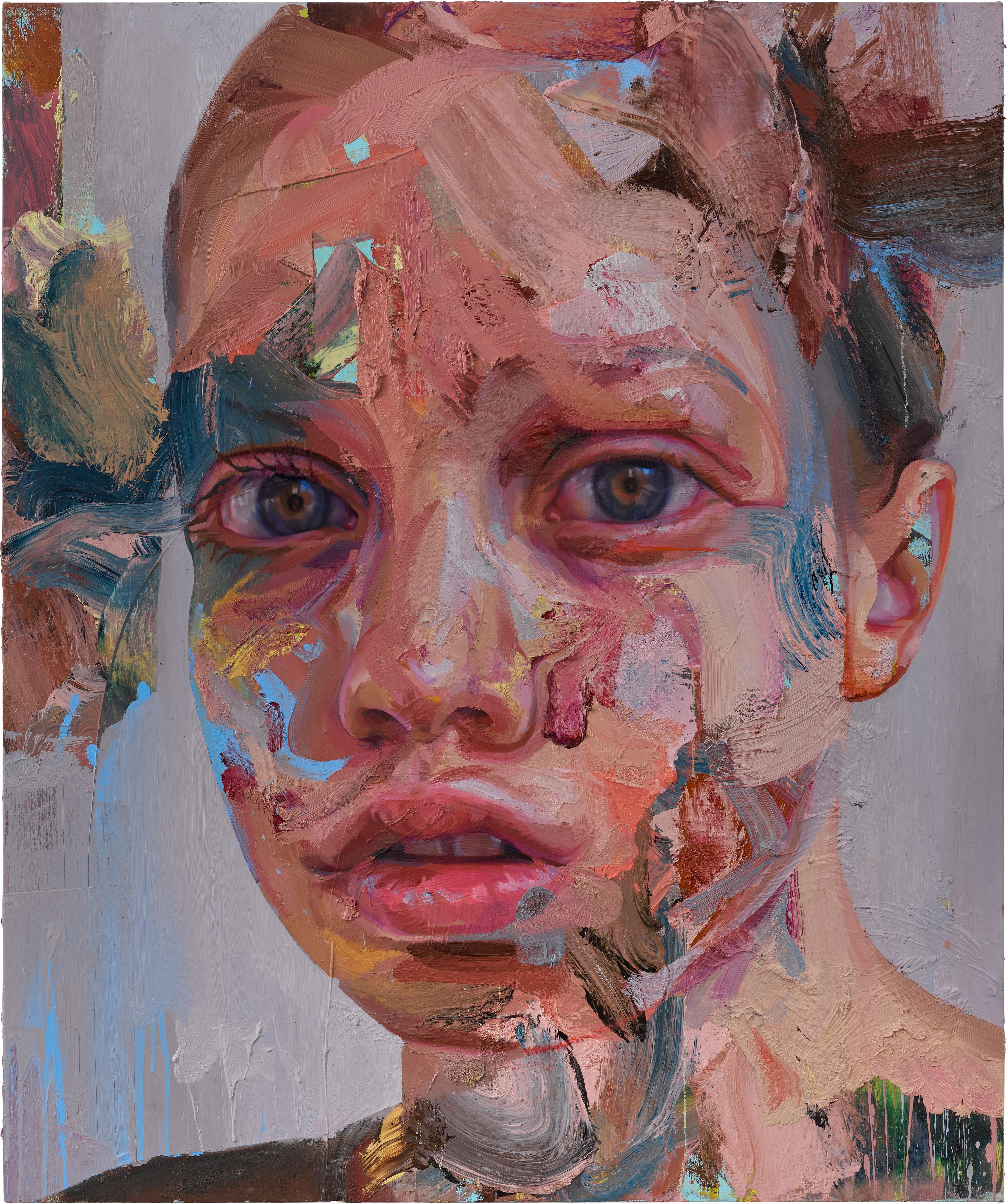
The Body, Painting, And Contemporary Identity
In the contemporary return to figurative painting, the human body has once again become a site of urgency and debate. Jenny Saville stands at the center of this shift. Over the last fifteen years, her work has redefined what it means to paint the body in a cultural moment shaped by questions of gender, identity, visibility, and power. Saville’s paintings do not aim to please; they demand engagement. They confront viewers with bodies that resist categorization and idealization, insisting on physical presence as a form of truth.
Saville’s approach to the figure is deliberately confrontational. Working on a monumental scale, she paints bodies that are compressed, layered, cut, and reassembled. Flesh is heavy and unstable; outlines dissolve into thick paint. These distortions are not expressions of violence against the body, but rather refusals of inherited visual conventions. Saville rejects the historical tradition in which the nude is passive, idealized, and constructed for consumption. Instead, her figures assert themselves through weight, density, and resistance.
What distinguishes Saville’s work is her understanding of painting as both material and conceptual inquiry. Her brushwork is aggressive and physical, leaving visible traces of revision and struggle. Paint becomes flesh, and flesh becomes paint. This collapse of distance between medium and subject reinforces the idea that the body cannot be easily contained within fixed definitions. Identity, in Saville’s work, is fluid, unstable, and layered — much like the painted surface itself.
Saville’s engagement with art history is direct and unapologetic. She draws from classical painting, Renaissance anatomy studies, and Baroque compositions, yet she disrupts these references from within. The authority of historical form is retained, but its values are challenged. By using the scale and ambition traditionally reserved for heroic or mythological subjects, Saville reclaims that space for bodies that have historically been marginalized or controlled.
Gender plays a central role in this process, but Saville’s work resists simple categorization as illustrative or didactic. Rather than offering clear statements, her paintings create zones of tension where beauty and discomfort coexist. The body is neither celebrated nor condemned; it is examined. In this way, Saville avoids reducing painting to ideology. Her work remains committed to complexity, ambiguity, and painterly intensity.
In the broader context of contemporary art, Saville’s influence lies in her insistence that figuration can still be intellectually rigorous. At a time when painting has often been declared obsolete or secondary to conceptual practices, her work reasserts its relevance through physical presence. The scale of her paintings slows the viewer down, demanding sustained attention and bodily awareness.
Saville’s impact is evident in a new generation of painters who approach the figure not as representation alone, but as a site of negotiation between form, identity, and experience. She has demonstrated that painting can engage directly with contemporary debates without sacrificing material depth or visual complexity.
Ultimately, Jenny Saville’s work affirms that the body remains one of the most powerful subjects in art — not because it is stable or ideal, but because it is vulnerable, mutable, and deeply human. Through her relentless engagement with flesh and form, Saville has expanded the possibilities of figurative painting, ensuring its continued relevance in the contemporary moment.


Relying on a single sale is no longer enough. From commissions to subscription platforms, licensing to...