✦ Follow Your Own Design Process — Whatever Gets You There
Design isn’t one-size-fits-all. Every creative journey is unique, shaped by individual habits, inspirations, and workflows. Whether you sketch first, dive straight into digital, or collect mood boards for days, what truly matters is that your process works for you.
In this post, we explore why embracing your personal design process is key to creativity and success — no matter how unconventional it may seem.
✦ What You’ll Learn
Why the process matters more than the method
Examples of different design workflows
How to build a process that fits your style
The importance of flexibility and iteration
Tips to overcome creative blocks by trusting your process
✦ 1. There Is No “Right” Way to Design
Some designers start with broad brainstorming sessions; others jump straight into wireframes. Some work best in silence, others thrive in collaborative chaos. Your process is your personal toolkit — designed to get your ideas from spark to reality.
Remember: The goal isn’t perfection; it’s progress.
✦ 2. Common Design Processes (But Feel Free to Mix It Up)
✔️ Research & Inspiration — Gathering references, trends, and user needs
✔️ Sketching & Ideation — Rough drafts, mood boards, mind maps
✔️ Prototyping & Wireframing — Early digital or physical models
✔️ Feedback & Iteration — Testing, refining, and evolving
✔️ Finalization & Delivery — Polishing and presenting the finished design
Your workflow might blend these steps or follow a different order entirely — and that’s perfectly fine.
✦ 3. Build a Process That Fits Your Style
Experiment to find what boosts your creativity and efficiency:
Do you think better with pen and paper or a tablet?
Does music help or distract?
How often do you seek feedback?
What tools make you feel most confident?
Make your process a reflection of your needs, not someone else’s checklist.
✦ 4. Stay Flexible and Iterative
Design is rarely linear. You might jump back to ideation after prototyping or switch tools mid-project. Embrace flexibility as part of your process. Iteration is where great ideas emerge.
✦ 5. Overcoming Blocks by Trusting Your Process
Creative blocks happen. When they do, lean on what works for you:
Change your environment
Switch from digital to analog (or vice versa)
Take breaks to recharge
Return to early inspiration and remind yourself why you started
Trusting your process builds confidence — and confidence fuels creativity.
✦ Why It Matters
Following your own design process isn’t just about efficiency; it’s about authenticity. Your unique way of working nurtures your best ideas and reflects who you are as a creator. When you honor your process, the work that comes out is richer, more original, and truly yours.
✨ Quote of the Week
“Design is not just what it looks like and feels like. Design is how it works.”
— Steve Jobs
🚀 Ready to Refine Your Design Process?
Try journaling your workflow or mapping your steps next time you create. Notice what feels natural, and what slows you down. Your best process is waiting to be discovered.



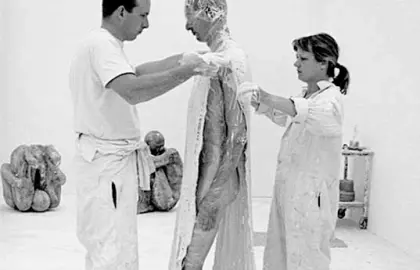

Anish Kapoor demonstrates that contemporary sculpture can function as a space of reflection, where material form...